Storm-damaged trees can turn a normal day into a safety problem within minutes. A tree may fall across a driveway, split near the trunk, land on a roof, or leave heavy limbs hanging over a path. When that happens, the safest next step is to call a trained local crew that can assess the risk, control the area, remove the tree in sections, and clear the debris properly.
The City of Charlotte advises residents to call 911 for tree-related emergencies such as active tree failure, a tree blocking a road, or a right-of-way tree falling onto private property. Non-urgent right-of-way tree issues can be reported through 311 or the CLT+ app.
When is a Tree Problem an Emergency?
A tree removal job becomes urgent when there is an immediate risk to people, buildings, vehicles, access routes, or utilities. Some cases can wait for a scheduled visit. Others need rapid attention.
Common emergency situations include:
- A tree has fallen onto a house, garage, shed, fence, or car
- A large limb is hanging over a roof, walkway, or driveway
- The trunk has split after strong wind or heavy rain
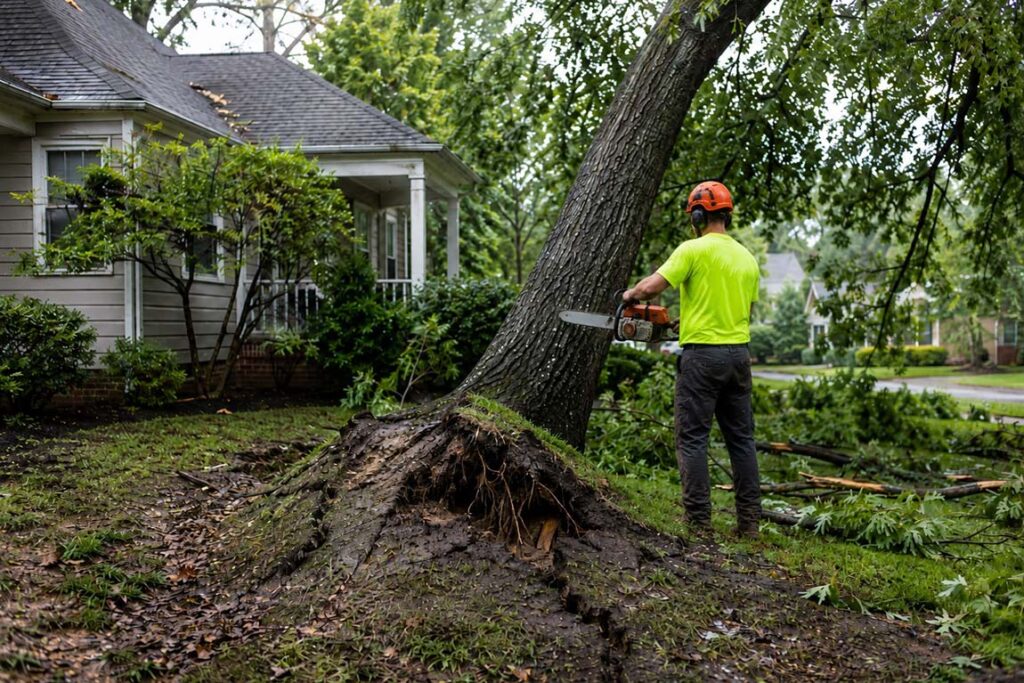
- A tree is leaning sharply and the soil around the roots has lifted
- Branches are tangled with power or communication lines
- A fallen tree is blocking a private driveway, street, or business entrance
A trained tree crew will look at more than the visible damage. They will consider the tree’s weight, the angle of the fall, pressure points, nearby structures, and whether the wood is under tension. Storm cleanup can involve hidden hazards, including electricity, traffic, unstable limbs, and loaded branches. OSHA highlights hazards such as work zones, drop zones, electricity, traffic, lean, and stored energy in wood.
Step 1: What Happens During the First Call?
The first call is about safety and triage. A reliable Charlotte tree service will ask clear questions before sending a crew.
You may be asked:
- Where is the property located?
- Has the tree hit a structure, vehicle, fence, or utility line?
- Is anyone injured or trapped?
- Is the tree blocking access?
- Are there hanging limbs above people or buildings?
- Can you send photos from a safe distance?
- Is there enough space for equipment?
Photos help the crew understand the scale of the job, but they should never be taken from beneath a damaged tree. If the tree is near a live wire, do not approach it. Keep people and pets away, and contact emergency services or the utility provider.
Step 2: How Quickly Can a Crew Arrive?
Response times vary. During a large storm, many homeowners may call at once. Crews usually prioritise situations that involve injury risk, blocked access, structural impact, or electrical hazards.
A typical priority order may look like this:
| Situation | Likely Priority |
|---|---|
| Tree on a home or business | Very high |
| Tree blocking a driveway or road | High |
| Tree near power lines | High, with utility coordination |
| Hanging limb over a roof or path | High |
| Fallen tree in open yard | Lower, if no immediate danger |
A company should avoid making promises it cannot keep. Weather, road conditions, night work, and equipment availability can all affect timing. The main goal is safe removal, not rushed cutting.
Step 3: The On-Site Safety Inspection
Once the crew arrives, they will inspect the area before starting work. This step may look quiet from the outside, but it guides the entire removal plan.
The inspection usually includes:
- Checking whether the tree is stable or still shifting
- Looking for cracked limbs and broken tops
- Identifying power lines, cables, fences, roofs, and windows
- Deciding where branches and trunk sections can safely fall
- Setting up a work zone to keep bystanders away
- Choosing tools such as ropes, rigging, saws, loaders, or cranes
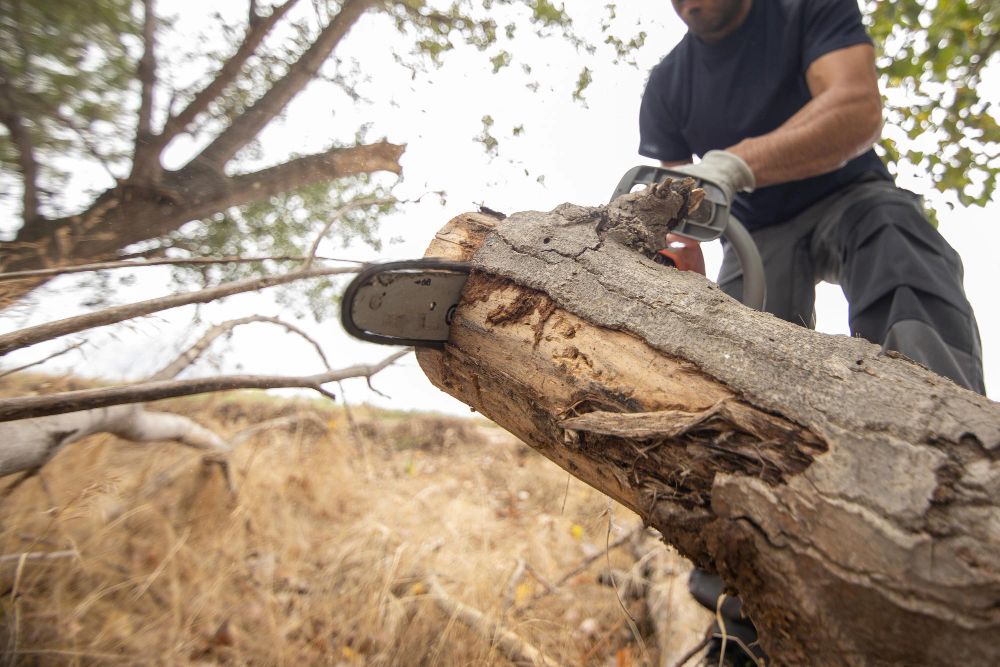
This is one reason homeowners should not try to remove a storm-fallen tree themselves. Chainsaws are dangerous even in normal conditions. OSHA advises operators to use proper protective equipment, check safety devices, look for metal objects, clear debris from the cutting path, and never work alone.
Step 4: How the Tree is Removed
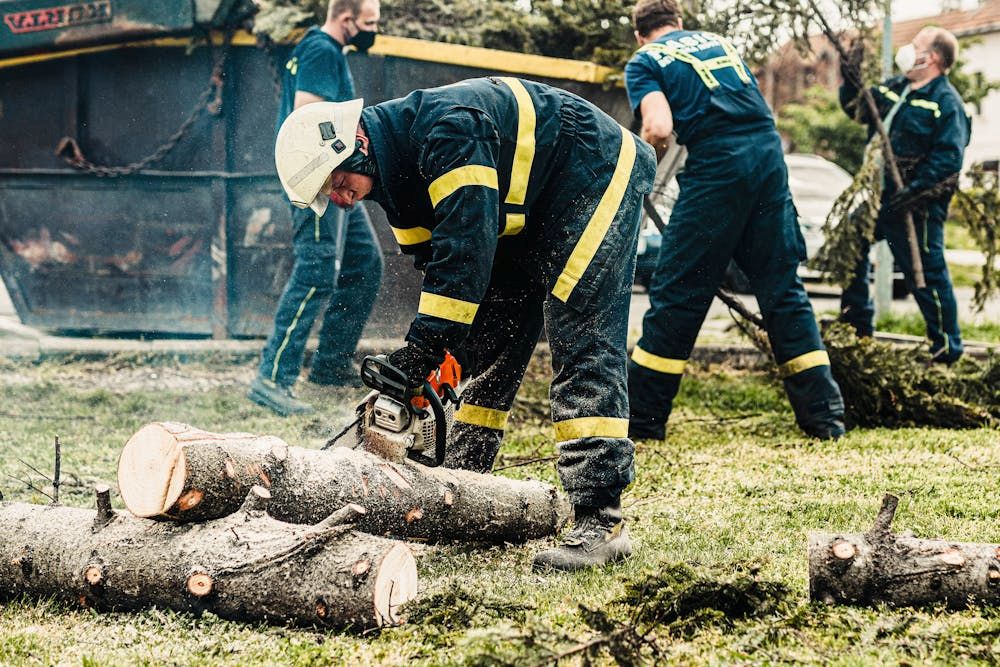
Emergency tree removal is usually done in controlled stages. Crews often remove branches first, then cut the trunk into manageable sections. If the tree is resting on a house, vehicle, or fence, the team may use ropes or lifting equipment to reduce pressure before cutting.
The method depends on:
- Tree size and species
- Direction of the fall
- Damage to nearby structures
- Ground conditions
- Access for trucks or machinery
- Whether the job requires climbing, rigging, or crane support
The safest method is not always the fastest-looking method. A careful crew specialized in tree removal will work in a planned sequence, so the tree does not roll, swing, collapse, or cause extra damage.
Step 5: Cleanup After the Removal
Cleanup is part of the job homeowners often care about most after the danger has passed. The level of cleanup should be discussed before work begins, as not every estimate includes the same services.
Cleanup may include:
- Cutting branches and trunk sections into smaller pieces
- Moving wood away from structures and access points
- Hauling away limbs and storm debris
- Raking or blowing the main work area
- Leaving firewood-sized logs if requested
- Scheduling stump grinding as a separate service
If insurance may be involved, take photos before and after removal. Keep invoices, written notes, and any reports provided by the tree crew.
Will Insurance Cover the Cost?
Coverage depends on your policy and the details of the damage. Many homeowners policies may help with tree removal when a tree falls because of a covered event and damages an insured structure. Coverage may be limited or excluded if the tree simply falls in the yard without damaging covered property. Policy terms, cause of loss, and structural damage matter when assessing tree removal claims.
Speak with your insurer before assuming what will be paid. Photos, receipts, and prompt reporting can make the claim process easier.
Why Call a Local Tree Removal Specialist?
A local crew understands Charlotte’s weather patterns, neighbourhood access issues, and local reporting steps for public trees and road hazards. More importantly, trained workers bring the right equipment and a safety-first plan.
When choosing help, look for:
- Insurance and proper business credentials
- Clear communication about timing and scope
- Experience with storm-damaged trees
- Written estimates where possible
- Cleanup options
- A willingness to explain safety concerns plainly
For a broader look at local rules beyond emergencies, our Tree Service in Charlotte, NC: Permits, Safety, and When to Call an Arborist (2026 Homeowner Guide) explains how permits, right-of-way trees, and arborist assessments fit into routine tree care.
Frequently Asked Questions:
What should I do if a tree falls on my house in Charlotte?
Stay away from the damaged area, move people and pets to a safe place, and call 911 if there is immediate danger. Do not touch the tree if wires are nearby. Take photos from a safe distance, then call a trained tree removal crew.
Can a fallen tree be removed the same day?
Same-day service may be possible, especially when a tree is blocking access or damaging a structure. During major storms, response times depend on call volume, weather, road conditions, and the level of risk.
Is it safe to cut a storm-damaged tree myself?
In most cases, no. Fallen trees can shift without warning, and branches under pressure may snap back. Chainsaw work near roofs, fences, or power lines should be handled by trained workers.
Does cleanup include hauling away all branches?
Often, yes, but it depends on the estimate. Ask whether the service includes debris hauling, log removal, raking, and stump grinding. Stump grinding is commonly priced separately.
Who should I call if a tree blocks a Charlotte road?
For a tree emergency involving a road or active failure, Charlotte residents are advised to call 911. For non-emergency right-of-way tree issues, use 311 or the CLT+ app.