
24/7 Emergency Tree Removal & Storm Damage Service in Charlotte, NC
Storms can cause significant damage to trees, leaving properties exposed to safety hazards, blocked access points, and potential structural damage. Whether a tree has fallen on your home, a large branch is hanging overhead, or strong winds have left a tree leaning dangerously, AAA Tree Experts is available to respond quickly and professionally.
Backed by more than 20 years of experience serving Charlotte-area property owners, our ISA-Certified Arborists and experienced tree care professionals provide emergency tree removal and storm damage services throughout Charlotte and the surrounding communities. We arrive fully equipped to assess the situation, secure the area, and perform the necessary work to restore safety to your property.
Available 24/7, we are ready to respond when unexpected tree emergencies occur.
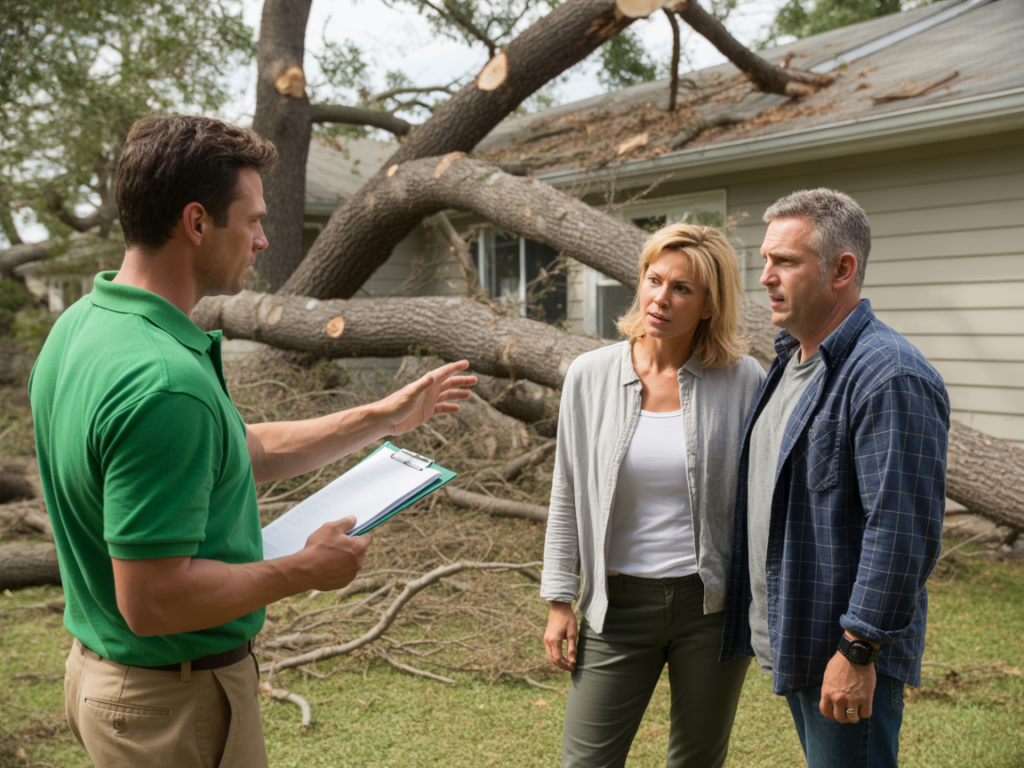
24/7 Emergency Storm Response
Severe thunderstorms, high winds, lightning strikes, heavy rainfall, ice storms, and hurricane remnants can all weaken or damage trees without warning. Throughout Charlotte and the surrounding communities, these weather events can cause trees to fail suddenly, leaving homes, vehicles, driveways, and commercial properties at risk.
Even trees that remain standing after a storm may have hidden structural damage that makes them unsafe.
When you contact AAA Tree Experts, our team will assess the condition of the affected trees, identify immediate hazards, and recommend the safest course of action. In many cases, prompt intervention can prevent additional property damage and reduce safety risks.
Our emergency storm damage services include:
Emergency tree removal
Hazardous limb removal
Storm debris cleanup
Fallen tree removal
Commercial storm cleanup services
Tree risk assessments
Emergency pruning and stabilization
HOA and property management storm response
Common Storm Damage Emergencies
Storm damage can affect every property differently. Our team regularly responds to a wide range of emergency situations throughout Charlotte and the surrounding service areas.
Tree Fell on a House
A tree that has fallen onto a home can create immediate structural concerns and safety risks. Our team works carefully to remove damaged trees while minimizing additional impact to the structure whenever possible.
Tree Fell on a Vehicle
Storm-damaged trees and large branches can cause significant damage to vehicles. We safely remove debris and help document the situation when needed for insurance purposes.
Tree Blocking a Driveway or Access Road
Fallen trees can prevent access to homes, businesses, and communities. Our crews can quickly remove obstructions and restore safe access.
Hanging or Broken Limbs
Broken branches suspended in a tree canopy can fall unexpectedly, creating hazards for people, vehicles, and structures below. Prompt removal helps reduce the risk of further damage.
Leaning Trees After High Winds
A tree that suddenly begins leaning after a storm may have experienced root failure or structural damage. Our arborists can determine whether the tree can be preserved or requires removal.
Trees Near Power Lines
If a tree or branch is in contact with power lines, always stay clear of the area and contact utility providers immediately. Once the area is deemed safe, our team can assist with the necessary tree work.
What To Do After Storm Damage
If a storm has damaged trees on your property:
Stay away from fallen or damaged trees.
Keep children and pets away from affected areas.
Never approach trees touching power lines.
Document visible damage if it can be done safely.
Contact a professional tree service for an assessment.
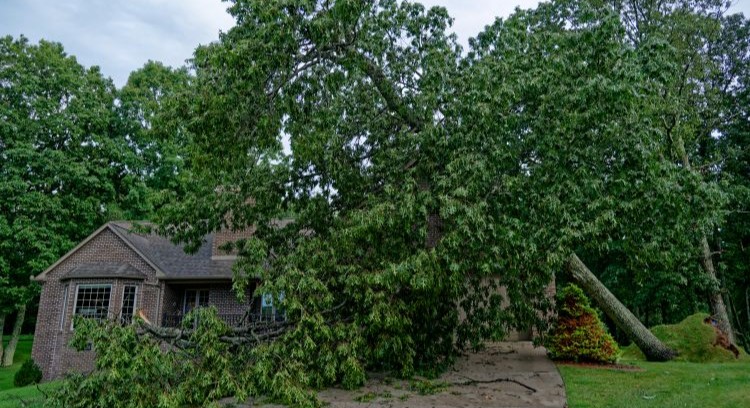
Storm-damaged trees can be unstable, even when damage is not immediately visible. Professional evaluation is often the safest option.
Why Storm Damage Should Be Addressed Quickly
Storm-damaged trees can become increasingly unstable over time. Charlotte properties frequently experience severe thunderstorms, strong wind events, heavy rainfall, occasional ice storms, and tropical weather systems that can weaken tree structures and compromise root systems. Cracked trunks, damaged roots, and hanging limbs may fail days or even weeks after a storm has passed.
Prompt assessment by a qualified arborist can help identify hazards before they cause additional property damage, block access to your property, damage structures, or create safety concerns.
- Testimonials
Read Our Reviews
 Posted on Google
 Pauline B
Trustindex verifies that the original source of the review is Google.
Blakeney Greens- City trees-, The City of Charlotte and AAA Tree Experts. My mission to get Blakeney Greens back on the city of Charlotte’s tree trimming list began on 5-25-2021. The city of Charlotte, true to their word, assigned AAA Tree Experts to trim the city trees that line our streets/sidewalks. On behalf of myself and my neighbors we all would like to thank the City of Charlotte for being true to their word and for assigning AAA Tree Experts to trim our trees. AAA Tree Experts- Thank you is not enough for the absolutely amazing job your dedicated team has done on trimming our city trees. AAA Tree Experts have literally transformed the city of Charlotte trees in the Blakeney Greens community. The feedback I am hearing includes: the trees now look gorgeous, now they look regal, majestic and beautiful. AAA Tree Experts communicated constantly throughout the weeks it took to trim our entire neighborhood, the crew was professional, respectful of our property, pleasant to walk by and highly skilled in performing their work. It was like watching an artist sculpt a piece of art work except AAA Tree Experts were sculpting our city trees. You know AAA Tree Experts is doing a fantastic job when residents are asking me when AAA Tree Experts will be on their street. Personally every time I would hear the sound of AAA Tree Experts chippers on our property it was like music to my ears. Again,, a hugh thank you to the City of Charlotte for assigning AAA Tree Experts to trim the city trees in Blakeney Greens. Our Blakeney Greens neighborhood city trees have literally been transformed. The added bonus, when the City of Charlotte assigned AAA Tree Experts to trim the Blakeney Greens city trees, the result cleared the illumination coming from our Duke Power street lights. The result dark areas are no longer dark. Highly recommend AAA Tree Experts!Posted on Google AnNeeded tree pruning and AAA Tree Experts did an excellent, thorough job! They advised about tree health and were accommodating. From the representative to the crew, everyone was pleasant to work with. Reaching out to their office and getting their insurance information was hassle-free and quick as well.Posted on Google
 Robert PollutriWe are having our trees trimmed in the Blakeney Greens Subdivision and wanted to compliment the staff on an wonderful job. I had the pleasure of meeting Mark and Brian who were just very kind and enjoyed our conversation..They coordinated the street closure and got the signs up so the cars had time to move..All went great.. You have a great team who are respectful and hardworking and thanks for all you do Rob..Bullock Greenway BlvdPosted on Google
 Maria LopezWe are SO pleased with the work done by AAA! They went above and beyond! Very professional, clean work site and the results are outstanding!! Highly recommended!!!Posted on Google
 pa Tanktimely, fairly priced, they are our tree guys! have used more than once and will use again in the future!Posted on Google
 ScottAAA Tree did a fantastic job. Had a big Willow Oak in my back yard that needed to come down. Daniel came out and gave me a very reasonable price for the job. They showed up a few days later and the crew did an amazing job. They worked on that tree all day but managed to get it done. So pleased and grateful for their hard work and professionalism. Highly recommended them for your tree needs.Posted on Google
 Shaun FergusonThe company was skilled and knowledgeable and provided us prompt service at a reasonable price. The office was responsive and professional, working with me on scheduling the service and answering questions.Posted on Google
 Karen WUpdate: we hired the team again to help with some trees in the backyard and again they did a great job. Would keep using them and will keep recommending! The team did an amazing job! They were recommended to us and they helped us identify what trees to remove/trim and which ones we could keep to help the remaining trees grow and get healthier. They took great care of the lawn as they did the work. We’re very efficient, friendly and easy to work with. And the price was the best of the three quotes we got. Highly recommendPosted on Google
 Janine JohnsonAAA Tree Experts helped me with the removal of an old, gigantic, Heritage Oak from my front yard. The tree had been known to have "substantial" cavities and although I was heartbroken to see it come down, I was grateful that AAA was handling it and not an unexpected gust of wind. Greg and his team, from the office to the field, were exceptionally professional and knowledgable. The work was completed in a day and my yard looked beautiful as the trucks drove away. I highly recommend AAA TREE EXPERTS for any tree service you may require.Posted on Google
 Ma SaWas trapped in my home for several days after the hurricane and within a day of contacting them they swooped in and saved us clearing the tree from our home and drive way quickly and professionally. They went above and beyond to avoid damage and leave our yard even better than before. Would absolutely recommend!Verified by TrustindexTrustindex verified badge is the Universal Symbol of Trust. Only the greatest companies can get the verified badge who has a review score above 4.5, based on customer reviews over the past 12 months. Read more

Can a Storm-Damaged Tree Be Saved?
Not every damaged tree requires removal.
One of the benefits of working with ISA-Certified Arborists is receiving an expert assessment before deciding on removal. Depending on the extent of the damage, some trees can be preserved through corrective pruning, structural support systems, or ongoing plant health care.
However, removal may be necessary when a tree has:
- Significant trunk splitting
- Severe root damage
- Major structural failure
- Extensive canopy loss
- A high likelihood of falling
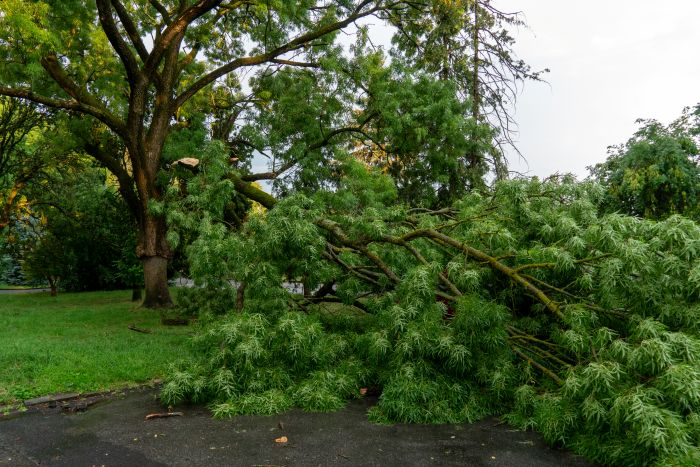
Our goal is always to recommend the safest and most practical solution for your property.
Our Emergency Response Process
Initial Assessment
We immediately evaluate the structural damage, identify active hazards, and determine the safest technical approach for the work.

Site Safety & Hazard Mitigation
Before removal begins, we secure the area and address immediate safety concerns to help protect your family, pets, neighbors, and property.
Tree Removal & Cleanup
Using specialized equipment, rigging systems, and industry-approved techniques, we safely remove damaged trees, hazardous limbs, and storm debris.
Final Property Review
Once work is completed, we inspect the site and ensure the area has been left clean, safe, and free from remaining hazards.
Insurance Claims & Documentation
Storm damage often raises questions about insurance coverage. While coverage varies by policy, many homeowners are required to provide documentation of the damage during the claims process.
If a tree has fallen on a home, vehicle, fence, garage, or other structure, our team can help document visible damage and provide information regarding the condition of the tree to support discussions with your insurance provider.
Addressing storm damage promptly can help reduce additional property damage and prevent further complications.
Commercial & HOA Storm Damage Services
AAA Tree Experts provides emergency storm response services for commercial properties, homeowners’ associations, apartment communities, municipalities, and property management companies throughout the Charlotte area.
We understand that storm damage can impact operations, create safety concerns, and disrupt access for residents, employees, and visitors. Our crews are equipped to handle projects of all sizes efficiently and professionally.
Why Property Owners Trust AAA Tree Experts
For more than 20 years, AAA Tree Experts has helped homeowners, businesses, and communities throughout Charlotte manage tree-related emergencies safely and effectively.
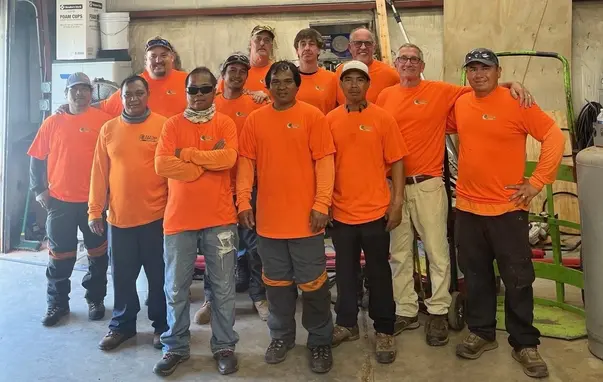
Property owners choose us because we offer:
- ISA-Certified Arborists
- Licensed and insured professionals
- 24/7 emergency availability
- Modern equipment and specialized tools
- Commitment to safety and customer satisfaction
- Residential and commercial expertise
- Comprehensive tree risk assessments
When storm damage occurs, having an experienced team on your side can make all the difference.
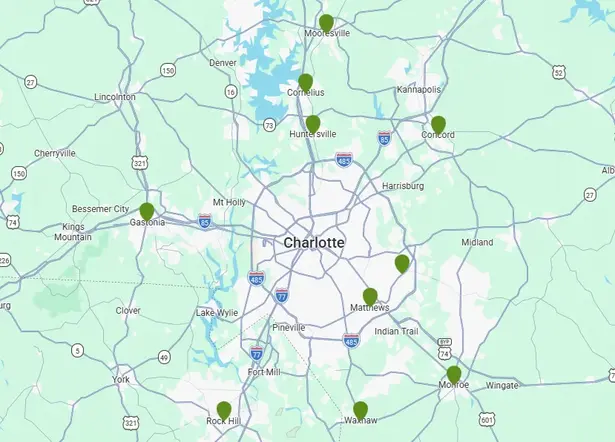
Serving Charlotte and Surrounding Communities
AAA Tree Experts proudly provides emergency tree removal and storm damage services throughout:
- Charlotte
- Huntersville
- Cornelius
- Matthews
- Mint Hill
- Monroe
- Waxhaw
- Gastonia
- Mooresville
- Concord
- Rock Hill, SC
We provide emergency tree removal and storm damage services for residential properties, commercial sites, HOAs, apartment communities, and municipal properties throughout the Charlotte metro area.
If a storm has damaged trees on your property, contact AAA Tree Experts for prompt, professional assistance.
Request Emergency Tree Service Today
Whether you’re dealing with a fallen tree, hazardous limbs, storm debris, or other tree-related emergencies, our team is available 24/7 to help restore safety to your property.
Call AAA Tree Experts today for immediate emergency tree removal and storm damage assistance throughout Charlotte and the surrounding communities.
Frequently Asked Questions
What should I do if a tree falls on my house during a storm?
If a tree has fallen on your home, prioritize safety first. Evacuate the affected area if there is structural damage, exposed electrical wiring, or a gas leak. Contact emergency services if necessary, then notify your insurance company. Avoid attempting to remove the tree yourself, as additional movement can cause further damage to the structure. A professional tree service can assess the situation, remove the tree safely, and help document visible damage for insurance purposes.
How quickly can emergency tree removal be completed?
Response times depend on weather conditions, accessibility, and the severity of the situation. Trees that pose an immediate threat to people, structures, or public safety are typically prioritized. Once on-site, a professional crew will assess hazards, secure the area, and determine the safest removal method. Many emergency situations can be addressed the same day, while larger or more complex projects may require additional time and equipment.
Can a storm-damaged tree be saved, or does it need to be removed?
Not every storm-damaged tree requires removal. Trees with minor canopy damage or broken branches can often recover with proper pruning and care. However, trees with significant trunk splitting, extensive root damage, severe leaning, or major structural failure may present ongoing safety risks and require removal. An ISA-Certified Arborist can evaluate the extent of the damage and recommend the most appropriate solution.
Is a leaning tree dangerous after a storm?
A tree that begins leaning after a storm should always be evaluated by a professional. Sudden leaning can indicate root failure, soil instability, or internal structural damage that may not be visible from the outside. Even if the tree remains standing, it could become unstable and fail unexpectedly during future wind or rain events.
Who is responsible for a fallen tree between neighboring properties?
Responsibility often depends on where the tree originated, where it fell, and whether negligence was involved. In many cases, property owners are responsible for damage that occurs on their own property, regardless of where the tree came from. Because every situation is different, it’s best to consult your insurance provider and have the tree professionally assessed and documented.
Will homeowners insurance cover storm-damaged tree removal?
Insurance coverage varies by policy and provider. Many policies may provide coverage when a tree falls due to a covered event and damages a home, garage, fence, or other insured structure. Coverage for removing trees that fall without causing property damage may be different. Property owners should review their policy details and speak directly with their insurance company regarding coverage questions.
Can you remove a tree that is touching power lines?
If a tree or branch is touching power lines, stay away from the area and contact your utility provider immediately. Power lines can remain energized even if they appear inactive. Once utility personnel have secured the area and confirmed it is safe, professional tree crews can perform the necessary removal work using appropriate safety procedures.
What are the signs that a tree may fail after a storm?
Common warning signs include large cracks in the trunk, exposed or lifting roots, significant leaning, hanging branches, split limbs, hollow areas, and sudden changes in the tree’s appearance. Trees showing any of these symptoms should be inspected promptly, as some storm-related damage may not become obvious until days or weeks after the weather event.
Do you provide emergency tree services for businesses and HOAs?
Yes. Emergency tree services are available for commercial properties, apartment communities, homeowners’ associations, municipalities, and property management companies. Storm damage can affect parking lots, roadways, common areas, buildings, and pedestrian access points. Professional crews can help restore safety and accessibility while minimizing disruption to daily operations.
How can I prepare my trees before storm season?
Routine tree care is one of the most effective ways to reduce storm-related risks. Regular inspections, pruning dead or weakened branches, addressing structural defects, and monitoring tree health can help identify problems before severe weather arrives. Trees that receive proactive maintenance are often better able to withstand high winds, heavy rainfall, and other extreme weather conditions.
Do I need emergency tree removal if the tree is still standing?
Can storm-damaged branches fall days after a storm?
Yes. Broken or partially attached branches can remain suspended in the canopy and fall days or even weeks later. Wind, additional rainfall, or normal tree movement can cause weakened limbs to fail unexpectedly. Prompt inspection and removal of hazardous branches can help reduce the risk of injury or property damage.