Trees are part of what makes Charlotte neighborhoods feel like Charlotte. They also bring a set of homeowner headaches that tend to show up at the worst times: after a windstorm, during a renovation, or when a limb starts scraping the roof at 2 a.m. If you’ve ever wondered “Can I just remove this?” or “Do I need a permit?” you’re not alone. The answers depend on where the tree sits, what shape it’s in, and what risks are nearby.
Why Charlotte tree work is rarely “just cut it down”
Tree work looks simple until it isn’t. A healthy-looking canopy can hide decay, and a tree that leans a few degrees can become unpredictable once cuts start. Costs also swing wildly because access and risk matter more than the number of cuts. A removal over a driveway is one thing. A removal over a roofline, near a fence, or in a tight side yard is another.
Permits and right-of-way trees: what homeowners need to know
In Charlotte, the first question is ownership and location. If the tree is in the public right-of-way (often between the sidewalk and curb, or in a street planting strip), the City can require an inspection and approval before work happens. The City’s Tree Management guidance notes that a tree work permit for a right-of-way tree can be issued after the work is approved by the City’s inspecting arborist, and that the work must be completed by a company with a certified arborist on staff. It also states that if a private company does the work, it’s at the resident’s expense and is not reimbursed.
If your planned work affects the right-of-way more broadly, Charlotte’s Right-of-Way permit information lists “tree trimming/landscaping” as an activity that can fall under right-of-way permitting.
There’s also a larger framework behind these rules. Charlotte’s tree ordinance includes permit requirements in specific contexts (for example, certain protected or “heritage” trees tied to development rules). The key takeaway for homeowners is simple: if you’re not sure whether a tree is protected or under city control, check first. Starting removal before the proper approval can put you in a bad spot.
Safety first: what to check before you touch anything
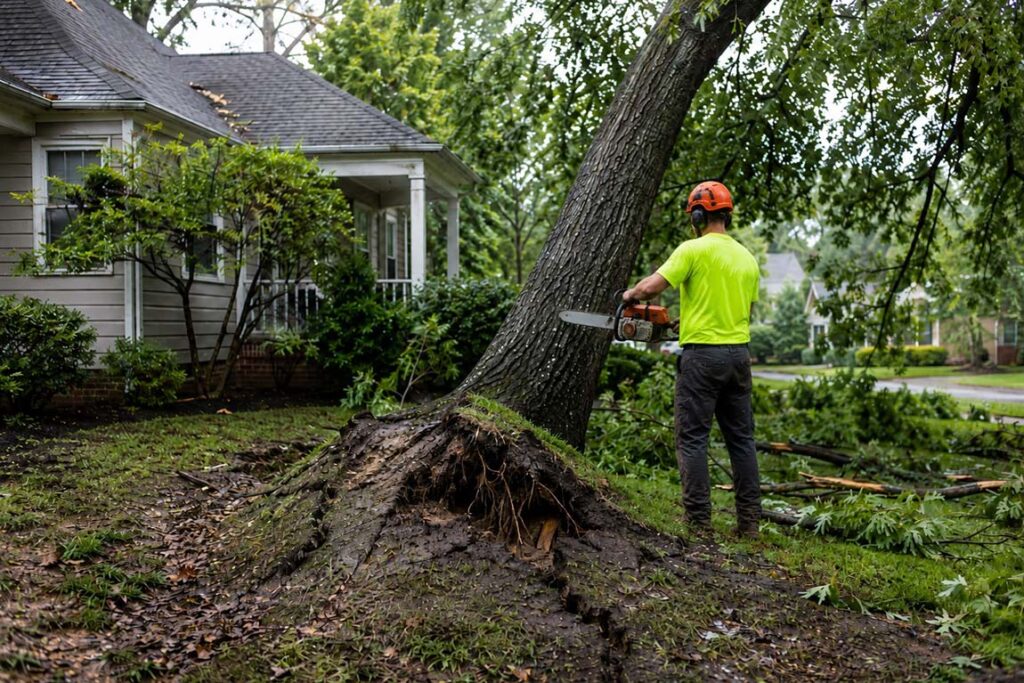
Storm damage and “almost down” trees are where homeowners get hurt. A few common hazards show up again and again:
- Downed or nearby power lines
- Heavy limbs broken but still hanging
- Branches bent under tension that can whip back
- Split trunks or cracks that widen when the tree shifts
- Root plates lifting (soil heaving around the base)
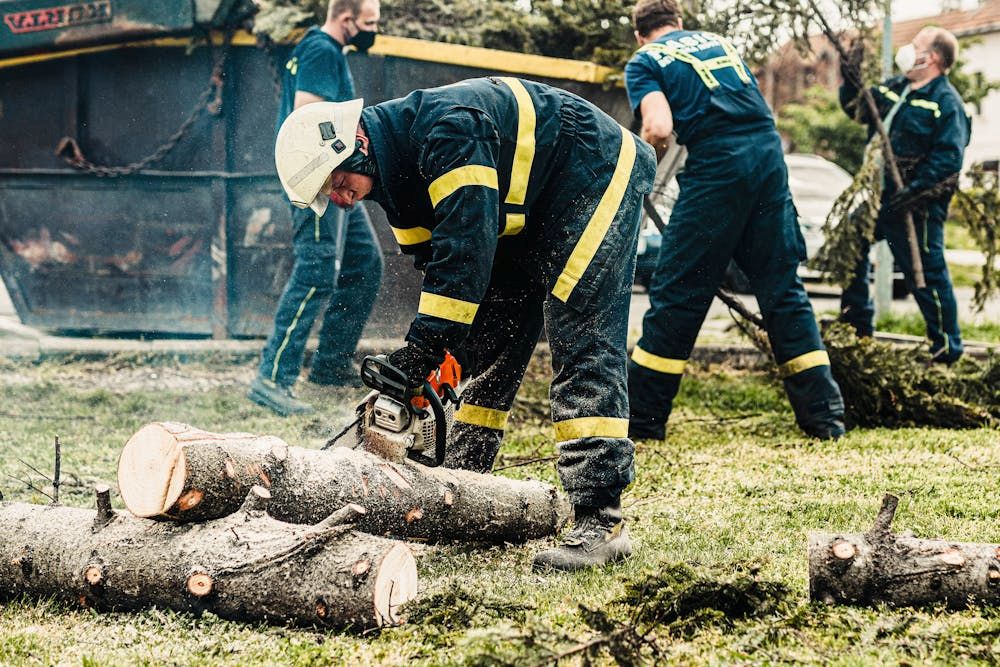
NC State Extension’s storm-damage guidance starts with site safety, including checking for downed power lines and watching for broken limbs that could fall, along with branches under tension that can spring back. Their decision-making guide also stresses that simple rules can’t cover every situation and that damage varies a lot tree to tree, which is exactly why in-person evaluation matters.
If any part of the tree is near electrical service, treat it as a stop sign. Call the utility or an appropriately qualified professional. Don’t assume “it’s insulated” or “it looks fine.”
When to call an arborist (and what they actually do)
A lot of people use “tree guy” and “arborist” like they mean the same thing. They don’t always.
An arborist’s job is to assess the tree as a living structure, not just remove wood. A good arborist can tell you whether a tree can be pruned to reduce risk, whether it needs cabling/support, or whether removal is the safest call. When you’re hiring, credential checks matter. A state forestry resource on hiring an arborist recommends checking for membership in professional organizations such as the International Society of Arboriculture (ISA) and verifying credentials rather than relying on job titles alone.
Situations that usually justify a professional site visit
You don’t need to outsource every small pruning job. You also don’t want to guess on high-risk work. Here are scenarios where getting an assessment tends to pay for itself:
- The tree is near a house, garage, fence, or power line
- You see cracks in the trunk, major deadwood, or mushrooms at the base
- The tree has started leaning more over time
- Soil is lifting around the roots or the ground feels “spongy” at the base
- A storm left a broken top, a split trunk, or hanging limbs
- You’re planning construction, driveway work, or grading near the roots
- The tree may be in the public right-of-way, and you’re unsure about approval
That last point matters in Charlotte. Right-of-way rules can change what “simple” means, and the City notes the requirement for a certified arborist on staff for prescribed right-of-way work.
Warning signs your tree may be failing
Some problems show up in the canopy. Others start at the trunk or roots. If you’re seeing fungus, cracks, a new lean, dead limbs, or a hollow trunk, read Signs a tree is dying (Charlotte): fungus, cracks, leaning, deadwood, hollow trunk before you decide on pruning or removal.
If you are trying to decide whether pruning is still enough or removal is the safer option, read our Charlotte homeowner’s guide on when tree removal is better than tree trimming.
What a solid quote should include (so you can compare apples to apples)
Homeowners often pick the lowest number and regret it later. When you request estimates for tree removal, tree trimming, or emergency tree service in Charlotte, ask for specifics in writing:
- Scope: exactly which trees/limbs, what size, and what kind of pruning
- Risk controls: ropes, rigging plan, traffic control if needed, and property protection steps
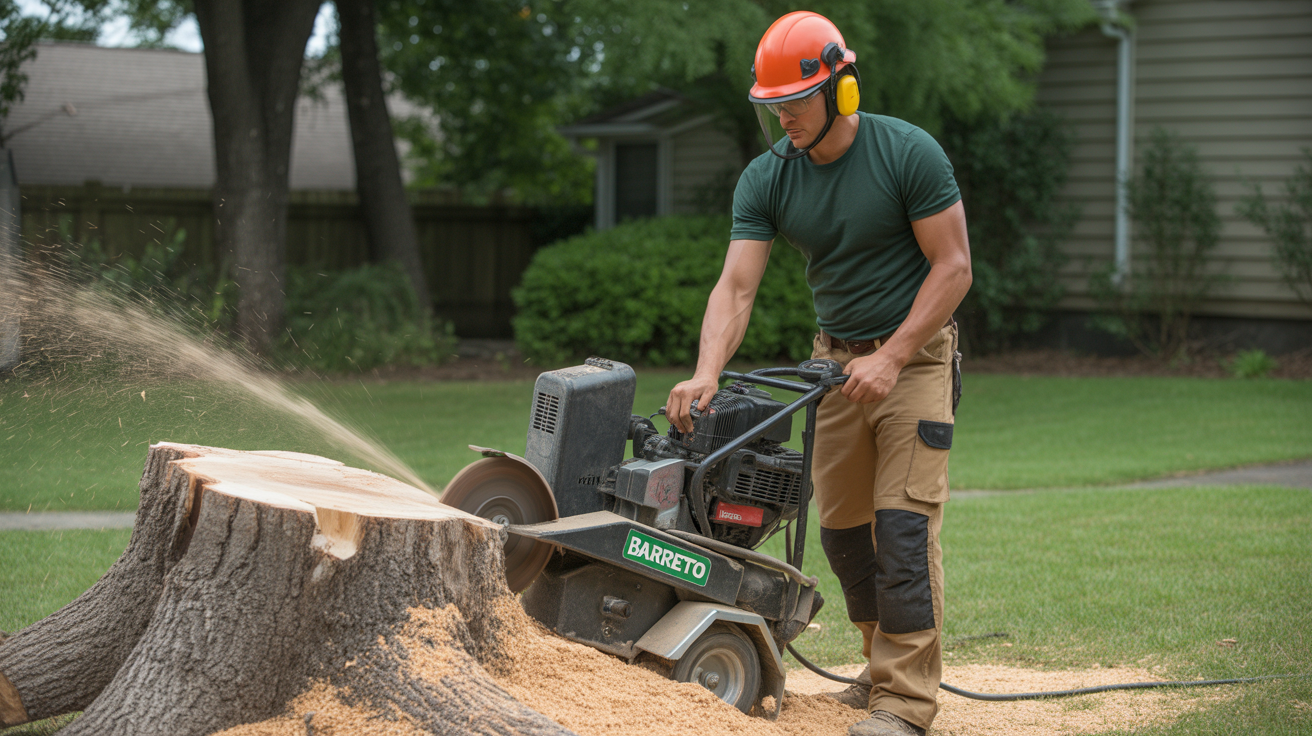
- Cleanup: haul-away details, stump grinding options, wood chips, and final raking
- Permitting: whether the company will help confirm right-of-way status and approvals (when relevant)
- Insurance: proof of coverage and who is responsible for damages
If a quote is vague, it’s harder to hold anyone to it.
Keeping trees safer between visits
Most emergencies have a long runway. A few habits reduce surprise failures:
- Schedule periodic inspections for mature trees close to structures
- Prune for clearance before branches start touching roofs or siding
- After storms, walk the property and look up, not just down
- If you see new cracks, sudden lean, or root lifting, treat it as urgent
NC State Extension’s storm-damage guidance is blunt about starting with safety checks and treating hanging or tensioned limbs with caution. That mindset works even outside storm season.
If you’re unsure whether a tree needs trimming, bracing, or removal, an arborist assessment can settle it quickly and prevent you from paying twice.
Learn more about AAA Tree Experts.