A tree can keep a full green canopy while serious problems build inside the trunk or roots. The U.S. Forest Service notes that trees may look vigorous even when major structural defects are present. That mismatch is why homeowners often miss the early warnings.
If you’re also sorting out permits, safety steps, and when to bring in an arborist, start with our Tree Service in Charlotte, NC: Permits, Safety, and When to Call an Arborist (2026 Homeowner Guide).
Start with the “target check”
Before you judge the defect, judge the stakes. A compromised tree in the back corner of a large yard is one situation. A compromised tree over a roof, driveway, sidewalk, or play area is another. Risk is about what could fail and what it could hit.
1) Fungus on the trunk or at the base
Mushrooms, shelf-like growths (conks), and brackets growing from the trunk or root flare often mean the fungus is feeding on decaying wood inside the tree. North Carolina State Extension’s gardener handbook explains that mushrooms, shelf fungi, or conks emerging from under bark indicate internal decay, and a tree can lose strength even when it still leafs out.
Two practical details:
- Where you see it matters. Growth on the lower trunk or at the base points to decay where the tree needs strength the most.
- One sign is rarely the whole story. Fungus plus dead branches, a lean, or cracking moves this into “schedule a visit” territory.
If the tree is near your home, consider booking a professional inspection rather than waiting for the next wind event. You can start with a Tree Risk Assessment or call for guidance.
2) Cracks in the trunk or major limbs
A crack is a structural warning, not a cosmetic one. The U.S. Forest Service hazardous tree defect guide describes cracks as deep splits into the wood and flags them as dangerous because they can indicate the tree is already failing.
What makes a crack more concerning?
- It runs vertically down the trunk
- It sits near a weak branch union
- It appeared after a storm, heavy rain, or soil saturation
- You see multiple cracks in the same zone
If you notice a new crack, avoid doing “cleanup cuts” yourself. Cutting changes load and can turn a marginal defect into a fast failure.
3) Leaning that’s new or getting worse
Some trees grow with a stable lean for decades. The problem is a lean that shows up suddenly or shifts over time. A new lean can point to root damage, soil movement, or a root plate that’s starting to lift.
AAA Tree Experts calls out leaning as a common signal that something’s off, often tied to root issues and higher storm-failure risk.
Quick checks you can do without tools:
- Look for fresh soil mounding on one side of the base
- Watch for cracks in the ground near the trunk
- Note if the tree seems to “rock” more than others in moderate wind
If you suspect storm-related instability, Charlotte-area homeowners often need help quickly. AAA Tree Experts has a Storm Damage Restoration service built around urgent hazards and cleanup.
4) Deadwood and hanging limbs
Dead branches happen in every yard. The difference is size, location, and quantity. Large dead limbs over a driveway, patio, or sidewalk deserve prompt attention. The U.S. Forest Service guide warns that dead trees and large dead branches are unpredictable and can fail without much warning.
Look for:
- Branches that never leaf out during the growing season
- Brittle twigs that snap cleanly instead of bending
- “Hangers” that broke but stayed lodged in the canopy
If the tree is otherwise healthy, targeted pruning may solve the problem. AAA Tree Experts provides pruning and trimming services in Charlotte for safety and canopy health.
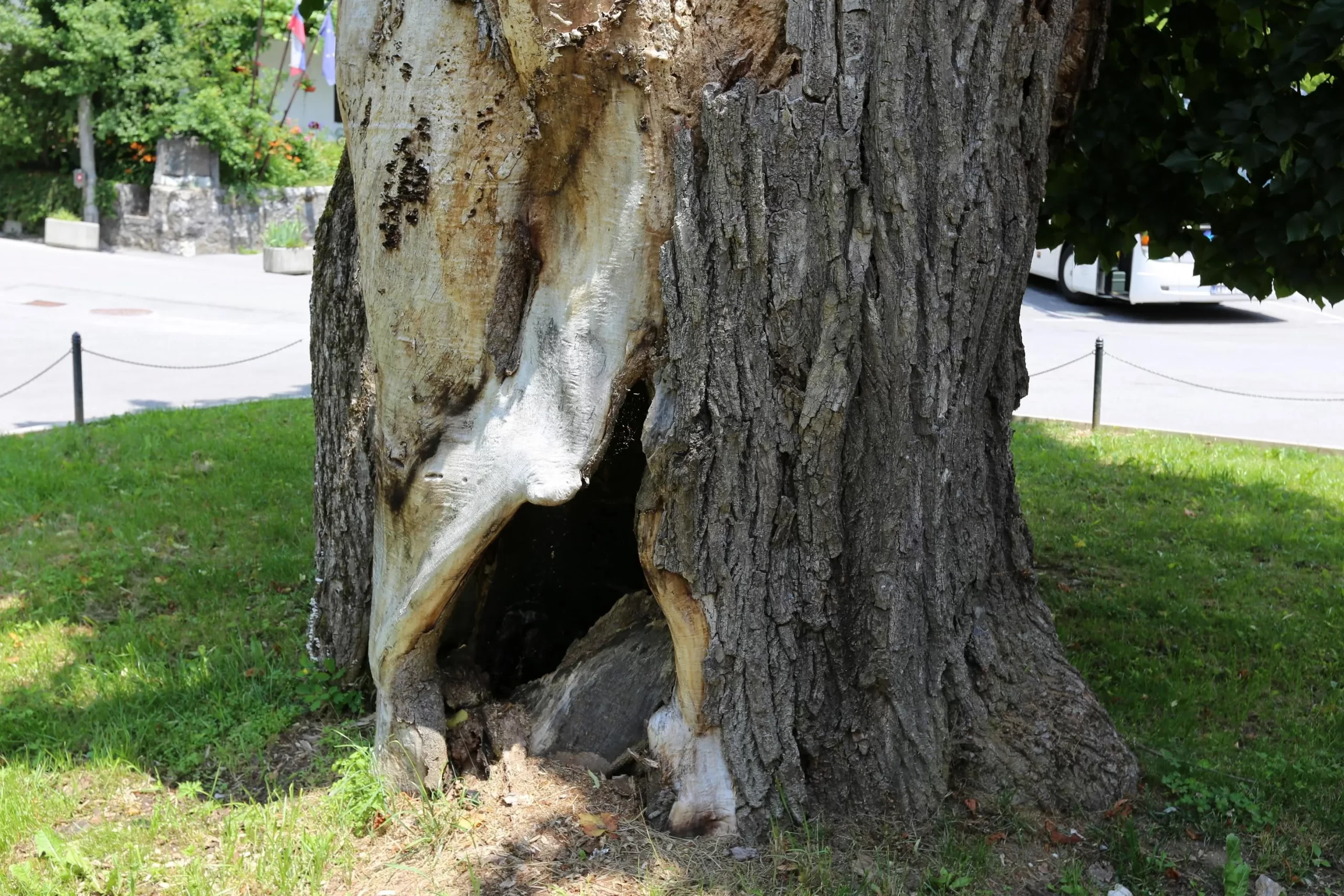
5) Hollow trunk, cavities, or soft spots
A hollow trunk gets a lot of attention because it’s visible. It can be serious, but it’s not an automatic verdict. Trees can develop cavities and still stand for years if enough sound wood remains. The Forest Service guide explains that advanced decay can show up as missing wood, soft/crumbly wood, and cavities, and it notes that fungal indicators on stems or root flares often accompany serious decay.
When does “hollow” become urgent?
- The cavity is large and sits low on the trunk
- You also see fungus, cracking, or major deadwood
- The tree has a noticeable lean
- The cavity faces a high-value target (roofline, parking area)
This is one of those situations where a trained assessment beats guesswork. If the tree is in striking distance of your home, start with a risk assessment rather than waiting for the next storm cycle.
A quick homeowner reference
| What you notice | What it can mean | Good next step |
| Fungus on trunk or root flare | Internal decay, reduced strength | Schedule an arborist evaluation |
| Deep crack in trunk/major limb | Structural failure risk | Keep people away, get professional help |
| New or worsening lean | Root instability, soil movement | Treat as urgent, avoid DIY cuts |
| Large dead limbs or hangers | Unpredictable breakage | Prune/remove promptly |
| Hollow trunk plus other defects | Advanced decay and failure risk | Get a Tree Risk Assessment |
When it’s time to stop DIY and call for help
If any of the following are true, a site visit is the safe move:
- The defect sits over a roof, driveway, sidewalk, or neighbor’s property
- You see two or more warning signs on the same tree (fungus plus deadwood is common)
- The tree is close to power lines
- The lean appeared after wind or rain
- You’re dealing with storm damage and hanging limbs
For urgent hazards, we offer 24/7 emergency response and can guide next steps fast.
A simple next step for Charlotte homeowners
If you’re seeing one of these signs and you want a clear answer, start with an assessment and a plan. Depending on what the tree needs, that may mean targeted pruning, risk reduction work, or removal.