


Are Your Trees in Trouble?
Declining trees often reveal their illness by way of visible symptoms. Leaves changing color too early, branches that are bare at the tips, and obvious deadwood are just a few indications that a tree is struggling. A homeowner can often determine that a tree maintenance consultation is needed. For example, trees of the same species usually change color and drop their leaves around the same time. If a homeowner has three birch trees in his or her yard and one begins to significantly change in color before the others, the homeowner can deduct that the tree most likely has some health issues and schedule a free consultation.
Warning Signs of Tree Problems
- Die-back (branches that are bare at the tips/ ends) or deadwood
- Decay (often evident by sight, touch, and visible fungus/ mushrooms)
- Early leaf drop or color change
- Peeling bark
- Leaf discoloration/ wilting
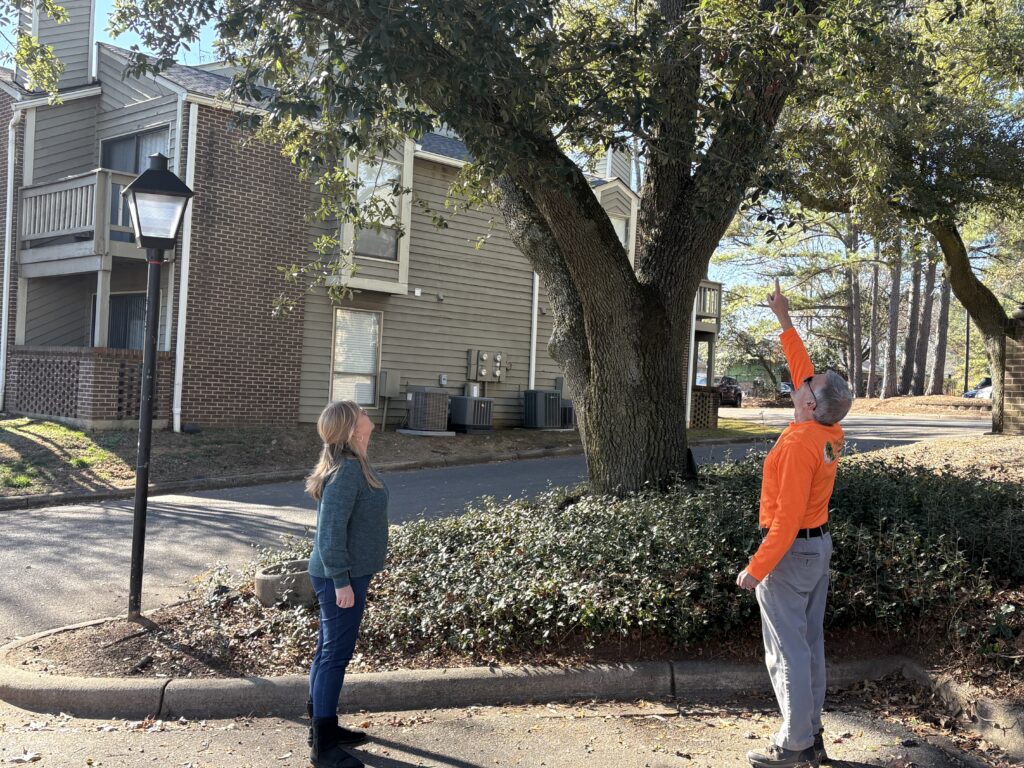
Visible signs of insect infestation (eaten leaves, bore holes, actual insects). Please Call 704-366-1134 or SCHEDULE AN APPOINTMENT on-line with an AAA TREE EXPERTS Arborist. We will do a complete inspection to determine if a course of action is required. A consultation with our arborist is FREE OF CHARGE.
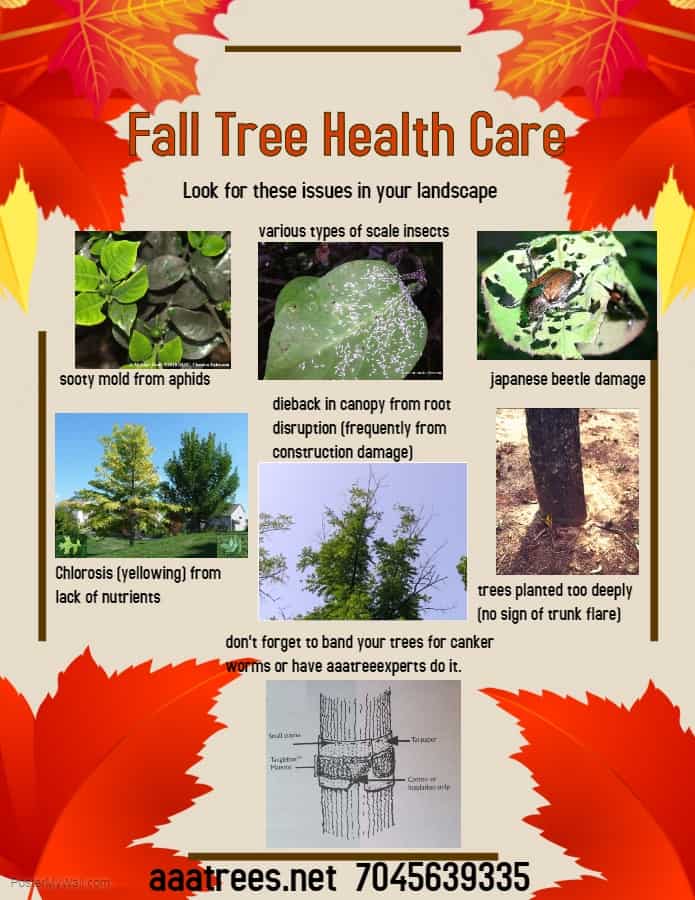

Spring Cankerworms in Charlotte
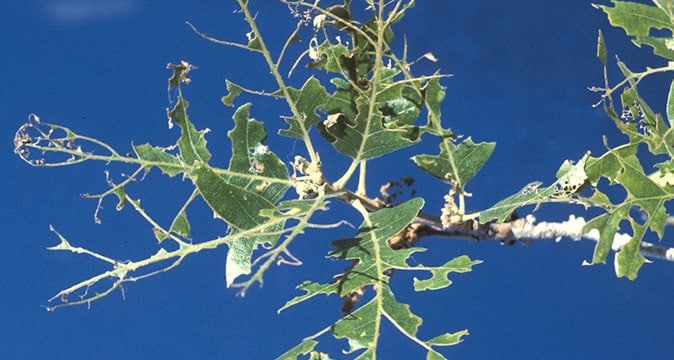
Spring Cankerworm caterpillars are a huge problem in Charlotte. Repeated defoliation weakens even the most spectacular trees (not only the ones stressed from drought or transplantation), causing them to use their energy to create a new set of leaves, reducing the tree’s defense against disease. A few seasons of defoliation can cause branch die-back and result in the death of the tree.
At the first sign of Cankerworms on your trees, call AAA Tree Experts for a special spray application that doesn’t harm pollinators or beneficial insects. To be very effective, spraying must be done when the trees are fully leaved and the larvae of Cankerworms are only about half grown. For effective suppression of infestation, trees should be treated by an arborist that has the equipment necessary to reach all the limbs of the tree. Fortunately, the spring Cankerworm caterpillars produce only one generation every year, so ongoing spray treatments are not needed.
We partner with property managers, construction companies, and facility maintenance teams to develop customized tree care plans that align with your business goals and seasonal needs.
Prepare Your Trees for Spring
Start by inspecting your trees for damage after a recent ice or snow storm. Trees may show new damage or worsening of old damage after heavy snow and ice. Look for holes in the trunk, cankers, cracks, numerous dead or weak branches, and especially for insect infestation and diseases. If you notice any of the aforementioned damage – call our arborist today. We will inspect your trees, remove all weak and diseased limbs and branches, and perform pruning and fertilization to boost your trees’ health and strength. We can thin overgrown shrubs in order to let some light into the middle of the plant. Your trees and shrubs are dormant right now, but the late dormant season is actually the best for pruning for some species; the wounds from pruning are left uncovered for only a short time before new growth in the spring begins the sealing process of the wound.
Tree De-mossing
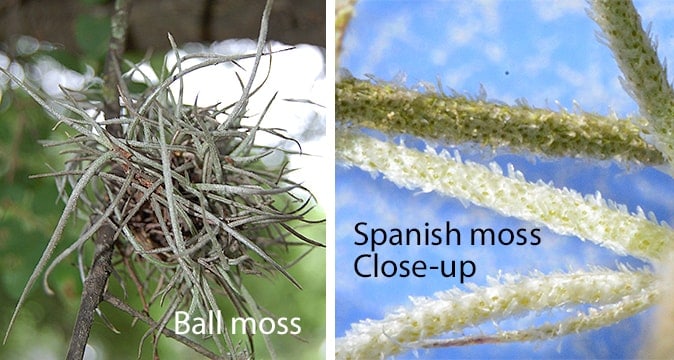
Moss can make trees less attractive, weaken and add weight to branches, and choke off new twig growth. De-mossing is the process of climbing trees and physically removing moss, and should only be done by a certified arborist to avoid hurting your trees and to save foliage that may be lost if not performed properly. We have the right tools and equipment to reach all branches of the tree to remove Ball or Spanish moss. We offer a FREE CONSULTATION to determine the best method of de-mossing (hand removal or chemical spraying) for your particular situation. The chemical spray we use is safe, will not harm your trees, and may even provide additional benefits to your trees.
How to Protect Your Trees from Salt this Winter
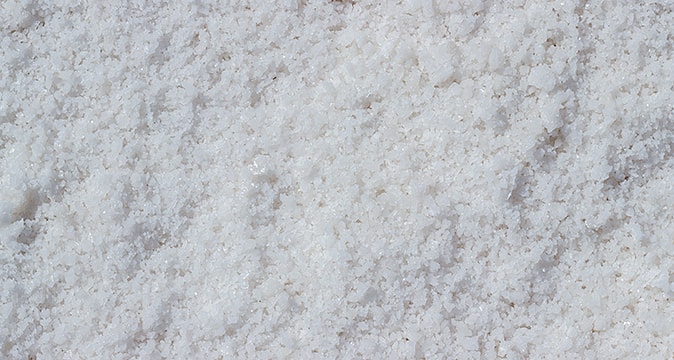
What will snow removal/de-icing practices be doing to your trees? As we all know, sodium chloride (salt) is helpful in providing dry, safe pavement for high-speed traffic, but is not good for a tree’s health. Signs of “salt distress” in your trees after the snow melts are reduction in leaf, flower, and fruit size, premature fall coloration and defoliation, stunting, and a general decline in the health of your tree.
How do you minimize or possibly eliminate salt damage? Reduce sodium by adding organic matter, activated charcoal, or gypsum. Build a physical barrier between the pavement and the plants. Provide adequate irrigation, and mulching to reduce water loss. Prune and fertilize to correct nutrient deficiencies. Water your tree to reduce the amount of salt in its system. In high-salt locations, you can also rinse the salt out of your trees and out of your soil.
Fall Deep Root Fertilization
Amend the soil where your tree and shrub roots exist this fall. We often mistakenly think of fertilization as something that should only be applied during the active growing season when in reality roots are currently taking up nutrients that will help them to resist disease and maintain vigor. Excess nutrients are stored and immediately available in the spring which is highly valuable to the tree and reduces the chances of stress which in time can lead to decline, failure, and death.
AAA Tree Experts uses a combination of worm castings (extremely nutrient rich) as well as a Sea Kelp fertilizer. We don’t bombard your trees and shrubs with excessive amounts of nitrogen which can be more harmful than helpful.
Charlotte seems to be the land of the overgrown willow oaks.These are a faster growing oak that often has poor attachment points and we frequently see willow oak branches or whole trees fail.
Cambistat is a plant growth regulator that can increase the chance of coexisting with your mature tree for an extended period of time. It can also lessen the frequency of needed pruning, which is kind of a bummer for our climbers, but good for your pocket book.
Proper Mulching
Unreasonable use of mulch usually leads to long-term problems for your trees. When too much mulch is piled up against the tree trunk, so that it looks like a “volcano”. is highly destructive to any tree (especially young ones). Excess moisture/vapors will build up on the trunk, making it open to mold/mildew/fungus to damage the trunk and start decay, stunting the growth of the tree, blocking off nutrient/gases/oxygen flow, and eventually killing your tree.
Why mulch?
Mulch keeps roots warm in the winter and cool in the summer, controls soil erosion, reduces evaporation (conserving soil moisture), reduces the nutrient loss due to other plants/grass around your trees, provides weed control and an environment for beneficial organisms/microorganisms/insects to supply healthier soil, eliminates stress in shallow-rooted plants, is aesthetically pleasing, and can also be used to create a no-mow zone.
Summer: Mulch will help to provide even moisture and cooler soil for the plant’s roots.
Winter: Mulch will help to provide warmth and protect the plant and its roots from freezing.
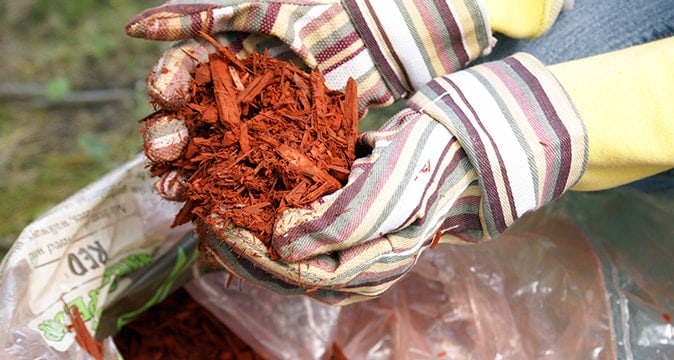
How to properly mulch a tree
Find the root flare of the tree (the place where the trunk begins to flare out before it connects with the ground). Pull grass/floral plants/perennial weeds from the area around the roots. You can begin placing mulch where the roots come down into the soil, away from the root flare. Two to four inches of mulch is all you need. If you put down a thicker layer of mulch, you will risk reducing oxygen to the tree’s roots. Don’t try to add more mulch every year, all you need is to rake the area and redistribute the mulch around the roots.
You will have much healthier plants and trees, better vegetable production, juicier fruits, a lower water bill, and less weeding. Plus, it’s inexpensive, and there are lots of sources of mulch no matter where you live.
Trees Stressed Out From Summer Heat & Drought?
Heat and drought stresses trees, making them weak and leaving them powerless to fight off even the most amiable pests and benign diseases. Trees become fragile and break easily, specially in autumn storms. Cooler autumn temperatures are around the corner, so it’s a great time to help your trees relax from the summer heat and drought.
Water right
You will need 10 gallons of water per inch of the tree’s trunk diameter (for each watering) 2 to 3 times per month. A garden hose (at medium water pressure) will deliver about 10 gallons of water approximately every 5-6 min. Water restrictions often allow for drip irrigation, which will take longer, but is an efficient way to water trees.
Liquid compost extract
Autumn is a good time to apply liquid compost as a foliar spray for quick relief to stressed trees. You can also apply a soil drench around the roots to stimulate beneficial microbes in the soil.
Deep root zone feeding
High-pressure injections of an organically-based, slow-release fertilizer below the soil surface for long-term nourishment.
Prune and trim
Autumn is the best time to prune/trim off dead, brittle, weak limbs, or even completely remove damaged trees that pose a risk of falling. Proper pruning and trimming will greatly reduce the risk of damage to your trees as the storm season approaches.
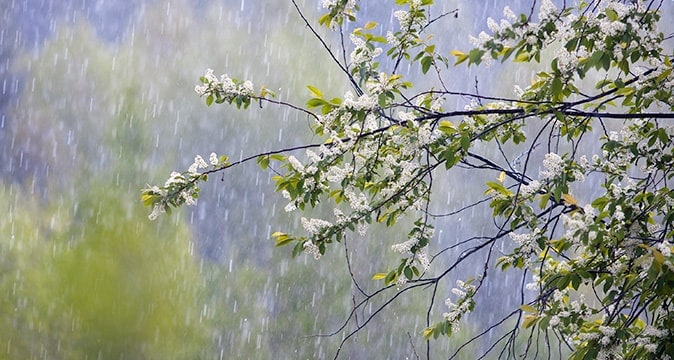
Soil Aeration and Root Flare Exposure After the Rain
There is potential danger for your trees’ or plants’ roots to suffocate from over saturated soil after rain. You need to reintroduce oxygen to your plants root zone. Soil Aeration (perforation of the soil with small holes to allow air, water, and nutrients to penetrate the roots) is essential for maximum plant growth. Dense, compacted, heavy soils tend to negatively impact oxygen flow, blocking vital nutrients from efficiently reaching your plants’/trees’ roots. They may develop numerous diseases, introduce toxins in your soil, hinder plant growth, in most cases leading to the death of the plant.
We can perform root flare exposure (excavation): we remove soil from the area around the trunk to check for deterioration and decay of the trunk tissue, girdling (or ring barking – complete detachment of a strip of bark from around the entire tree circumference), choking roots, or excessive soil accumulation. We use a high-pressure air spade in order not to damage any roots during the flare exposure process. Care will be taken by our tree experts not to inflict further damage to your tree/plant.
Are you Noticing Dark Spots on the Leaves of Your Oak Trees?
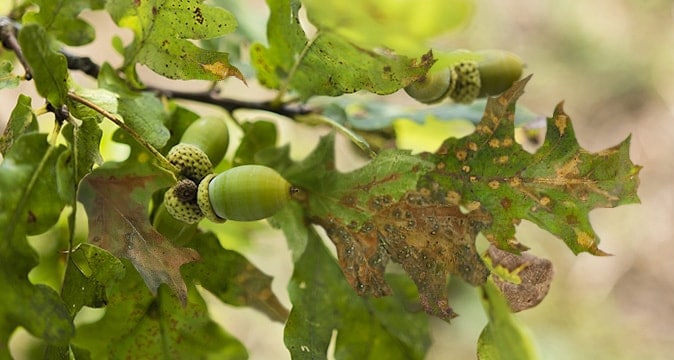
Tubakia (Actinopelte) Leaf Spot is a late-season (August, September) infectious leaf disease of oak trees. The initial symptoms of Tubakia leaf spot are dark brown or reddish-brown spots on leaves. Spots can appear on leaf veins, which can lead to the death of the veins and collapse of leaf tissue, resulting in the early defoliation of oaks. These are not to be confused with the symptoms of oak anthracnose, which develops earlier in the season (May, June). But don’t worry, in most cases Tubakia Leaf Spot leaves the tree looking rugged, but will not kill the tree. Please DO NOT attempt to use fungicide sprays to try and combat Tubakia leaf spot. You can reduce the number of spores that cause this disease by removing and disposing of fallen, infected leaves (via burying, burning or composting) and watering and fertilizing trees appropriately.
Twig Girdler – Warning About this Pest
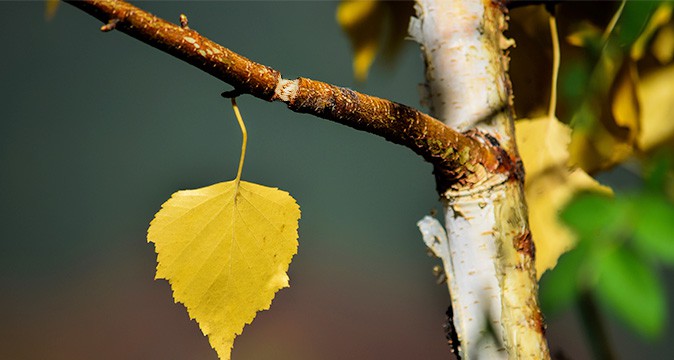
The Twig Girdler is a beetle (gray to brown colored longhorned beetle with a gray stripe across the wing) that usually emerges from late August to early October. Small populations aren’t cause for big concern, but left untreated, these beetles can multiply into a full infestation and cause serious damage. Twig Girdler beetles girdle (cut away) twigs and small branches causing the injured portions to break away or hang loosely on the tree. The ground under infested trees is usually covered with twigs. As a result of this beetle infestation, nut/fruit trees often end up with lower yields for years. What do you do? Natural control is usually the best. Severed twigs on the ground and those lodged in trees should be gathered and destroyed during the fall (when the females are laying eggs), winter, and spring when the eggs and grubs are still in the twigs. This way infestation can be greatly reduced in one or, in moderate cases, in two seasons. If debris infected with pests or disease is not disposed of, it can infect your trees again, or spread to surrounding trees. Twig Girdlers can be treated with systemic products that are consumed when the insect feeds on the tree. However, females don’t feed on the tree tissue, and can be very difficult to control.
If you notice small tips of branches on your trees suddenly turning brown and breaking away, call us. Our certified arborists can recommend a plan for reducing the twig girdler population and further damage to your trees.
Have a Leaning Tree?
Leaning trees should always be a cause of concern in the landscape of your property and need immediate assessment by a certified arborist experienced to determine the root system’s structural integrity. Most trees that are leaning have limbs that are uneven or too many growing on one side of the tree. Poor tree planting, planting trees in a windy corridors, root structure damage, and construction or soil heaving are causes of a leaning tree. Sometimes, natural disasters (hurricanes, ice storms, tornados) can cause tree leaning. We can straighten young leaning trees by digging up part of the root, making sure to limit any root damage, then replanting it at the correct angle. Then we stabilize it using a special brace. When your tree is stabilized, we will add the right amount of mulch, root stimulator and thoroughly water it. We also have methods for correcting large leaning trees. We can temporarily support a tree until its root system is established enough to support it alone. Evaluation by a professional arborist is the best way to deal with a leaning tree situation. We can perform a tree removal if the situation warrants it.

Warning: using harvested rainwater for drinking requires several levels of filtration and chemicals for disinfection.
Watering Your Trees With Rainwater
Rainwater is best when it comes to watering your trees for a number of reasons. Rainwater is:
- Free of salts (sodium), minerals, harmful chemicals (chlorine/fluoride), water softeners and pollutants usually found in municipal treated water.
- Contains traces of organic material (good as fertilizer for your trees).
- Keeps your soil pH in balance.
- Conserves freshwater, reduces water pollution, lowers your water bill.
- The natural temperature of rainwater doesn’t shock your tree’s roots.
- The easiest method of collecting rainwater for irrigation is taking it from building gutters or downspout diverters and storing it in a clean outdoor tank, rain barrel or cistern. Containers should stand covered in a shaded place.

- Testimonials
Read Our Reviews
 Posted on Google
 Pauline B
Trustindex verifies that the original source of the review is Google.
Blakeney Greens- City trees-, The City of Charlotte and AAA Tree Experts. My mission to get Blakeney Greens back on the city of Charlotte’s tree trimming list began on 5-25-2021. The city of Charlotte, true to their word, assigned AAA Tree Experts to trim the city trees that line our streets/sidewalks. On behalf of myself and my neighbors we all would like to thank the City of Charlotte for being true to their word and for assigning AAA Tree Experts to trim our trees. AAA Tree Experts- Thank you is not enough for the absolutely amazing job your dedicated team has done on trimming our city trees. AAA Tree Experts have literally transformed the city of Charlotte trees in the Blakeney Greens community. The feedback I am hearing includes: the trees now look gorgeous, now they look regal, majestic and beautiful. AAA Tree Experts communicated constantly throughout the weeks it took to trim our entire neighborhood, the crew was professional, respectful of our property, pleasant to walk by and highly skilled in performing their work. It was like watching an artist sculpt a piece of art work except AAA Tree Experts were sculpting our city trees. You know AAA Tree Experts is doing a fantastic job when residents are asking me when AAA Tree Experts will be on their street. Personally every time I would hear the sound of AAA Tree Experts chippers on our property it was like music to my ears. Again,, a hugh thank you to the City of Charlotte for assigning AAA Tree Experts to trim the city trees in Blakeney Greens. Our Blakeney Greens neighborhood city trees have literally been transformed. The added bonus, when the City of Charlotte assigned AAA Tree Experts to trim the Blakeney Greens city trees, the result cleared the illumination coming from our Duke Power street lights. The result dark areas are no longer dark. Highly recommend AAA Tree Experts!Posted on Google AnNeeded tree pruning and AAA Tree Experts did an excellent, thorough job! They advised about tree health and were accommodating. From the representative to the crew, everyone was pleasant to work with. Reaching out to their office and getting their insurance information was hassle-free and quick as well.Posted on Google
 Robert PollutriWe are having our trees trimmed in the Blakeney Greens Subdivision and wanted to compliment the staff on an wonderful job. I had the pleasure of meeting Mark and Brian who were just very kind and enjoyed our conversation..They coordinated the street closure and got the signs up so the cars had time to move..All went great.. You have a great team who are respectful and hardworking and thanks for all you do Rob..Bullock Greenway BlvdPosted on Google
 Maria LopezWe are SO pleased with the work done by AAA! They went above and beyond! Very professional, clean work site and the results are outstanding!! Highly recommended!!!Posted on Google
 pa Tanktimely, fairly priced, they are our tree guys! have used more than once and will use again in the future!Posted on Google
 ScottAAA Tree did a fantastic job. Had a big Willow Oak in my back yard that needed to come down. Daniel came out and gave me a very reasonable price for the job. They showed up a few days later and the crew did an amazing job. They worked on that tree all day but managed to get it done. So pleased and grateful for their hard work and professionalism. Highly recommended them for your tree needs.Posted on Google
 Shaun FergusonThe company was skilled and knowledgeable and provided us prompt service at a reasonable price. The office was responsive and professional, working with me on scheduling the service and answering questions.Posted on Google
 Karen WUpdate: we hired the team again to help with some trees in the backyard and again they did a great job. Would keep using them and will keep recommending! The team did an amazing job! They were recommended to us and they helped us identify what trees to remove/trim and which ones we could keep to help the remaining trees grow and get healthier. They took great care of the lawn as they did the work. We’re very efficient, friendly and easy to work with. And the price was the best of the three quotes we got. Highly recommendPosted on Google
 Janine JohnsonAAA Tree Experts helped me with the removal of an old, gigantic, Heritage Oak from my front yard. The tree had been known to have "substantial" cavities and although I was heartbroken to see it come down, I was grateful that AAA was handling it and not an unexpected gust of wind. Greg and his team, from the office to the field, were exceptionally professional and knowledgable. The work was completed in a day and my yard looked beautiful as the trucks drove away. I highly recommend AAA TREE EXPERTS for any tree service you may require.Posted on Google
 Ma SaWas trapped in my home for several days after the hurricane and within a day of contacting them they swooped in and saved us clearing the tree from our home and drive way quickly and professionally. They went above and beyond to avoid damage and leave our yard even better than before. Would absolutely recommend!Verified by TrustindexTrustindex verified badge is the Universal Symbol of Trust. Only the greatest companies can get the verified badge who has a review score above 4.5, based on customer reviews over the past 12 months. Read more
