

Tree Trimming in Charlotte, NC
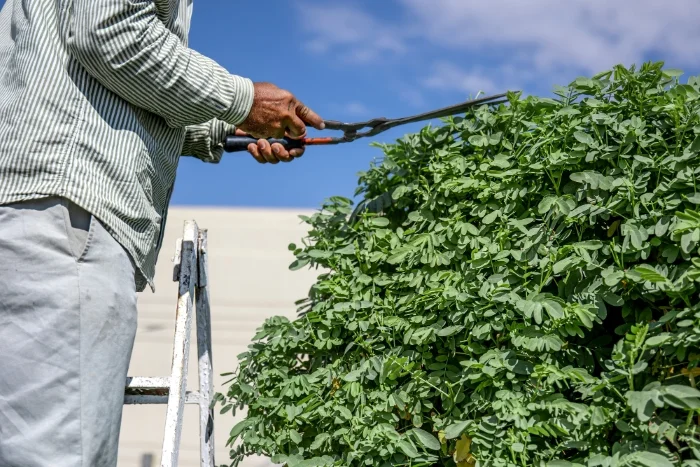
Tree trimming manages a tree’s overall growth and shape by clearing branches away from your roof, driveway, or power lines, opening up sightlines, and keeping a canopy looking maintained. It’s the service most homeowners are picturing when they say “our trees need some work done” and the issue is really about space and appearance rather than the tree’s underlying health.
If dead wood, disease, or storm damage is the actual concern, you may want tree pruning instead; see our pruning vs. trimming comparison if you’re not sure which applies.
What Tree Trimming Involves
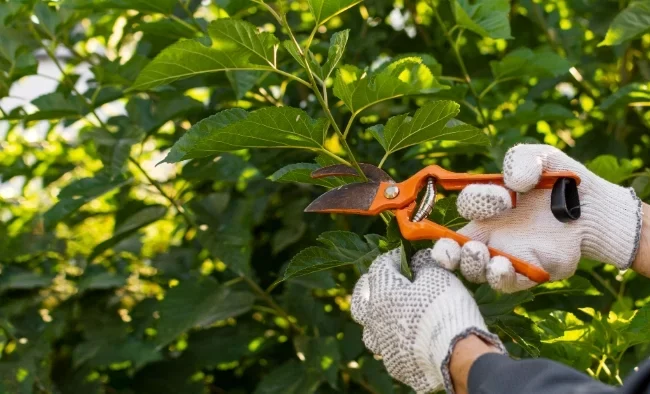
Trimming addresses growth that’s gotten ahead of the space around it: branches reaching toward a roofline, crowding a driveway, blocking a walkway, or simply making a tree look overgrown. It’s less about diagnosing the tree’s internal health and more about managing where and how it grows, though a good arborist will still flag any health concerns they notice along the way.
When Homeowners Need Trimming
Branches are reaching or scraping your roof, siding, or gutters
Growth is crowding a driveway, walkway, or parking area
A tree is blocking a window, a security light, or a sightline from your driveway
The canopy just looks overgrown or unbalanced compared to the rest of the yard
You're preparing your property ahead of storm season and want weight and reach reduced on limbs near your house
Trimming for Roof, Driveway, and Structure Clearance
This is the most common reason Charlotte homeowners call for trimming. Branches that rub against a roof can wear through shingles over time and give pests an easy path onto the house; branches over a driveway or walkway create clearance and safety issues for vehicles and people. We trim with a specific clearance distance in mind, not just “cut back some branches.”
Storm Preparation
Ahead of Charlotte’s spring and summer storm season, trimming back limbs that overhang your roof or driveway reduces the amount of debris and weight that can come down in high winds a practical, lower-cost step before storm season rather than an emergency response after it. If a storm has already caused damage, our 24/7 storm restoration team handles that separately from routine trimming.
Residential and Commercial Trimming
For homeowners, trimming is usually about a handful of trees near the house, driveway, or yard. For commercial and HOA properties, it’s often broader sightlines along parking areas, consistent canopy shaping across a property, and coordinating around business hours or tenant access. We handle both, and the underlying approach (clearance, shape, and access) is the same either way, scaled to the property.
Canopy Management and Appearance
Beyond clearance, trimming is also how a tree’s overall shape stays balanced and proportionate over time, reducing top-heavy growth, evening out a lopsided canopy, or simply keeping a tree looking cared-for rather than wild.
What a Professional Pruning Visit Involves
Assessment
We look at what's actually crowding structures, walkways, or sightlines, and how much can safely come off without stressing the tree.

Trimming
Using the right tools for the tree's size and access, from hand tools to aerial lifts for taller work, we cut back the growth that's causing the problem.
Cleanup
All trimmed material and debris are hauled away before we leave your property.
What Affects Trimming Cost
Cost depends on the tree’s height and reach, how much clearance is needed, how many trees are involved, and whether aerial equipment is required to reach the work safely. As with pruning, we provide a free on-site estimate rather than a blind phone quote.
How Often Trees May Need Trimming
This varies by species and growth rate; fast-growing trees near a roofline may need a look every year or two, while slower-growing or well-established trees may go longer between visits. If you’re not sure where your trees stand, an estimate visit will tell you.
When Trimming Isn't Enough
If a tree is leaning, showing large dead sections, or has significant trunk damage, trimming alone won’t fix the underlying problem. In those cases, our arborists can recommend a full inspection or, if necessary, tree removal. We’ll always tell you honestly if trimming isn’t the right call.
Trimming vs. Pruning
In short: trimming is about growth, clearance, and appearance; pruning is about the tree’s underlying health and structure. See our full comparison if you’re deciding between the two.
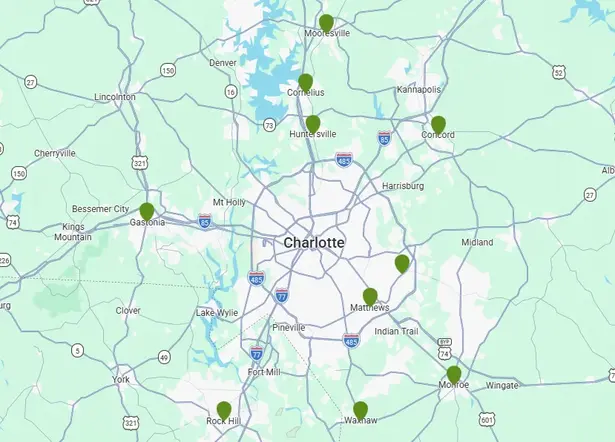
Serving Charlotte and Surrounding Communities
AAA Tree Experts provides tree trimming throughout
- Charlotte
- Huntersville
- Cornelius
- Matthews
- Mint Hill
- Monroe
- Waxhaw
- Gastonia
- Rock Hill, SC
- Mooresville
- Concord
- Connect with Us
Schedule Your Free Trimming Estimate
Call 704-366-1134 or request a free on-site estimate – we’ll tell you honestly whether your trees need trimming, pruning, or both.
Frequently Asked Questions
How is tree trimming different from tree pruning?
Trimming generally manages growth, shape, and clearance, keeping branches away from your roof, driveway, or sightlines. Pruning targets specific branches for the tree’s health, removing dead or weak wood. Many visits involve some of both, and our arborists will tell you which your tree actually needs.
How much does tree trimming cost in Charlotte?
It depends on the tree’s size, how much clearance is needed, and whether aerial equipment is required. We provide free on-site estimates.
How much of a tree can be trimmed at once without hurting it?
As a general industry guideline, arborists try to avoid removing more than about a quarter of a tree’s live canopy in a single visit, since taking off too much at once stresses the tree and can trigger weak, fast-growing regrowth in exactly the wrong places. If your tree has gotten significantly overgrown, it’s often safer to bring it back gradually over more than one visit than to do it all at once.
Is topping the same as tree trimming?
No, and it’s worth knowing the difference before you hire anyone. Topping means cutting large branches or a main trunk back to stubs, often to reduce a tree’s overall height quickly. It’s common with overgrown crape myrtles in the Charlotte area (sometimes called “crape murder” locally), but it’s not something our arborists recommend or perform. Topping triggers weak, poorly attached regrowth, increases long-term storm risk, and often shortens the tree’s life. Proper trimming and crown reduction achieve a smaller, more manageable size without those downsides.
Will you trim branches near power lines, or does the utility company handle that?
It depends on which line. Duke Energy is generally responsible for clearance around the main distribution lines running along the street, and homeowners typically don’t need to arrange trimming there themselves. The service line running from the utility pole to your house is different: as the property owner, you’re generally responsible for keeping that line clear, and before any of our crews work near it, we coordinate with Duke Energy to have that line de-energized at no cost, for our team’s safety and yours.
Do I need a permit to trim a tree in Charlotte?
For routine trimming on private residential property, away from the public right-of-way, a permit typically isn’t required. Charlotte’s permitting requirements are mainly tied to tree removal, protected or “heritage” trees, and work that affects the public right-of-way. If your situation involves any of those, or you’re simply not sure, we can help you figure out what applies before work begins.
Should I trim my trees before storm season?
Reducing weight and reach on branches that overhang your roof or driveway ahead of storm season is a reasonable, proactive step. If a storm has already caused damage, that’s handled by our emergency storm restoration service instead.
What happens to the branches and debris afterward?
We haul away all trimmed branches and debris before we leave your property as part of the service. You shouldn’t be left with a yard full of cut limbs to deal with yourself.
Do you trim trees for HOAs and commercial properties?
Yes. We provide both residential and commercial tree trimming across the Charlotte area.
Is DIY tree trimming safe, or should I hire a professional?
Light trimming on small, low branches you can reach from the ground is reasonable for many homeowners. Anything requiring a ladder, a chainsaw, work near a roofline, or work anywhere close to a power line is safer left to an insured professional; the risk isn’t just to the tree, it’s to you.